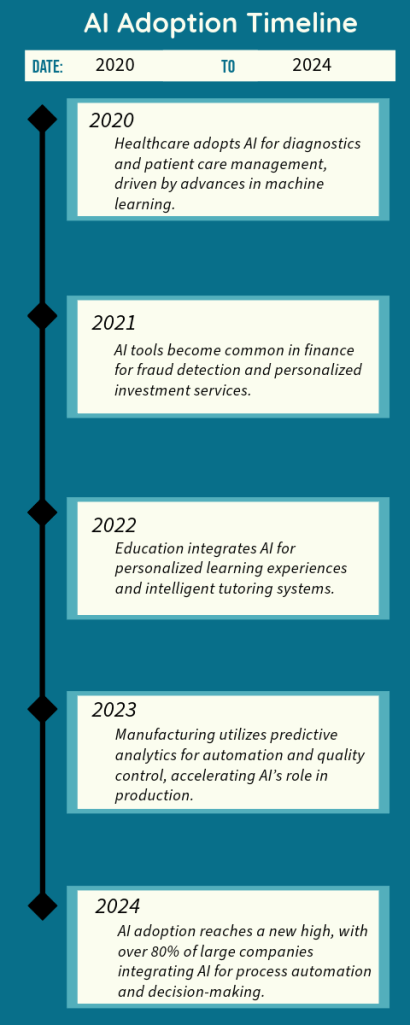
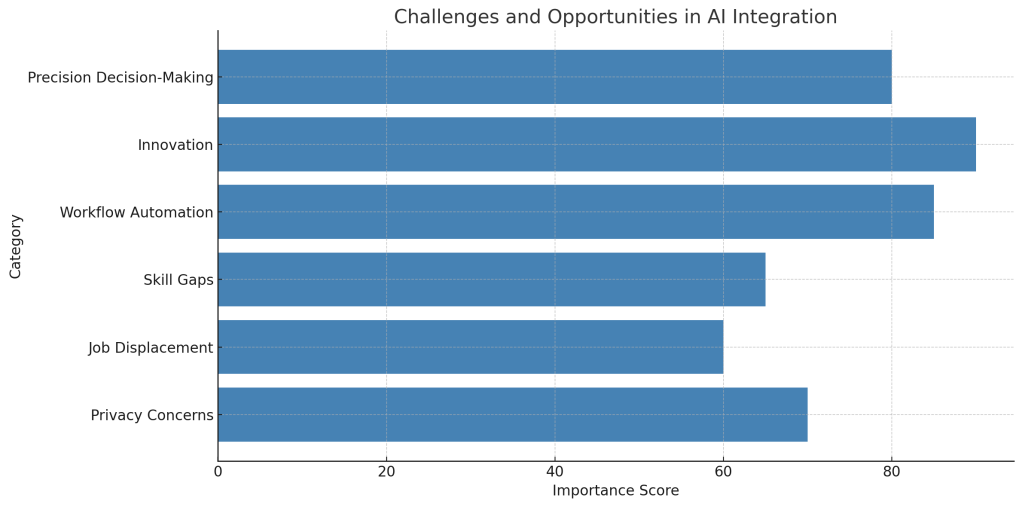
In the last five years, artificial intelligence (AI) has evolved from a futuristic technology to an essential tool across countless industries, fundamentally changing how professionals work. From healthcare IT and finance to education and freelance content creation, AI’s influence is reshaping roles and redefining how people think about productivity. While AI offers significant benefits, such as improved efficiency and automation, it also raises serious questions about job displacement, privacy, and the long-term impact on human autonomy.
Through the stories of five professionals, this article examines how AI is reshaping their fields and explores both the opportunities and challenges that come with the rise of intelligent systems in the workplace.
https://x.com/TechReleas/status/1888791136602296340
The Growing Role of AI Across Industries
AI’s impact is no longer limited to the tech sector. According to the report Opening Up the Workplace: The Way AI Tools Are Changing Productivity, businesses using AI experience higher efficiency and reduced operational costs. AI tools are helping companies automate routine tasks, streamline workflows, and augment human decision-making processes.
Grant Ashby, a water sanitation specialist at Total Water, sees AI as a vital tool in his field. “AI systems help monitor water quality in real time, detecting anomalies much faster than manual checks ever could,” Ashby explains. This capability has significantly improved safety and accuracy in water management. Still, Ashby acknowledges that while automation is beneficial, human oversight remains crucial.
“We can’t rely on AI alone,” Ashby adds. “Technology can analyze data faster than we ever could, but it lacks the human intuition needed for more complex decisions.” Balancing machine efficiency with human expertise is a continuous challenge, especially in environments where safety and compliance are critical.
Artificial intelligence (AI) is transforming the modern workplace, reshaping industries, and redefining professional roles. Over the past five years, AI has moved from a futuristic concept to an essential tool in fields like healthcare, finance, and education. While AI offers significant benefits such as boosting efficiency, enhancing decision making, and improving productivity, it also raises important questions about job security, data privacy, and human oversight. Through the perspectives of five professionals, this story examines how AI is changing the way we work and what that means for the future of the workforce.
Automation and Finance: Redefining Accounting
In the accounting world, AI is redefining how professionals approach data analysis, tax preparation, and financial reporting. Brooke Stulga, a senior accountant, has seen firsthand how AI tools have reduced time spent on repetitive tasks, allowing her team to focus on strategic decision-making.
“What used to take hours now takes minutes,” Stulga says. “AI-driven analytics help us identify patterns and predict outcomes, which makes financial planning much more efficient.” However, she is quick to warn of the risks.
“AI can’t always interpret data accurately without the right context,” she explains. “That’s where human judgment comes in.” For Stulga, maintaining a balance between automation and human oversight is essential to ensure accurate reporting and avoid costly errors.
Looking ahead, Stulga believes AI will continue to expand in the accounting field, but it will never fully replace human decision-making. “AI is a tool, not a solution,” she says. “We use it to enhance what we do, not to replace our expertise.”
Freelance Content Creation: Adapting to New Realities
For Howard Guytan, a freelance content creator, AI is both a blessing and a challenge. Tools like ChatGPT have revolutionized content generation, helping him streamline his work and meet tight deadlines. However, these same tools have also increased competition in the freelance market.
“AI has made writing easier, but it’s also raised the bar,” Guytan says. “Anyone can use AI to produce content now, so standing out takes more creativity and strategic thinking.” The job search process itself has also been transformed by AI-driven hiring systems.
Guytan notes that many companies now rely on algorithms to screen resumes and conduct initial assessments. “You have to optimize your resume for keywords because AI filters out applications that don’t match,” he explains. While these tools save time for employers, they can also unintentionally overlook qualified candidates.
Despite the challenges, Guytan remains optimistic. “AI forces us to adapt and grow,” he says. “It’s about finding new ways to work with technology, not against it.”
AI in Healthcare IT: Enhancing Operations and Security
In the high-stakes environment of healthcare IT, AI plays a crucial role in managing complex systems. Ben Lanoue, a Tier 1 and 2 IT Technician at a hospital in Illinois, sees AI as a valuable tool for predicting system failures and optimizing network performance.
“AI allows us to stay ahead of potential issues before they become major problems,” Lanoue explains. Predictive analytics tools help his team prevent downtime, which is critical in a hospital setting. However, with greater reliance on AI comes heightened cybersecurity risks.
“Data security is a constant challenge,” Lanoue warns. “As we integrate more AI-driven systems, we have to ensure that sensitive patient information remains protected.”
Despite these challenges, Lanoue believes AI will continue to revolutionize healthcare IT. “The potential is enormous,” he says. “We just need to remain vigilant and stay ahead of emerging threats.”
AI in Social Media: Building Engagement in Healthcare
For Caitlin Walker, a social media manager at Loyola Medicine, AI has transformed how she engages with her audience. By using AI-driven analytics, Walker’s team can better understand user behavior and create targeted campaigns that resonate with specific demographics.
“AI allows us to personalize content in ways that weren’t possible before,” Walker explains. “We can analyze trends and predict what our audience wants to see.” However, she emphasizes the importance of human oversight, particularly in a healthcare context where accuracy and trust are paramount.
“The human element is critical,” Walker says. “AI helps gather insights, but the final message always needs a human touch.”
Walker also points out the ethical challenges of relying on AI-generated content. “Trust is everything in healthcare,” she says. “We have to make sure our content is accurate and compassionate.”
Balancing Innovation and Responsibility
Research from Workplace AI and Human Flourishing highlights the tension between AI’s promise of efficiency and the potential erosion of human dignity and autonomy. While AI tools can improve hiring processes and reduce bias, they also raise ethical questions about fairness and transparency.
The Future of Artificial Intelligence in the Workplace argues that companies integrating AI thoughtfully can achieve significant gains without compromising ethical standards. The key is balancing innovation with responsibility, ensuring AI complements human workers rather than replacing them.
Navigating the Future of Work
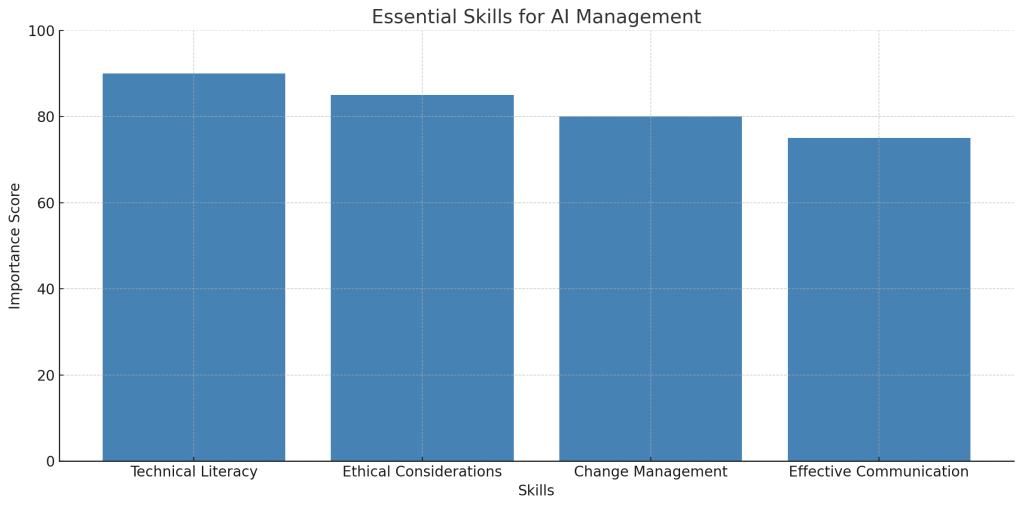
As AI continues to evolve, its impact on the workplace will only grow. For professionals like Grant, Brooke, Howard, Ben, and Caitlin, adapting to this new reality is essential. The future of work lies in blending human creativity with machine efficiency to achieve new levels of productivity and progress.
The industries that embrace AI responsibly will shape the workplace of tomorrow. One where technology empowers people, rather than displacing them.

 Tech Releases
Leave a comment